5 critical flows green in 10 working days. After that, every alert is a real bug.
Most teams get a suite to 30% coverage, watch it go red for reasons nobody can explain, and quietly stop trusting it. We take that job over and put a price on it. If a red reaches you and it was our test, not your bug, that month is free.
- First spec
- Free, within 72 hours
- 5 flows
- 10 working days
- Written in
- Standard Playwright
- Lives in
- Your repository
- If you leave
- Any month, nothing to rip out
€990 pilot · first spec in 72 hours · 5 flows in 10 working days · green or free
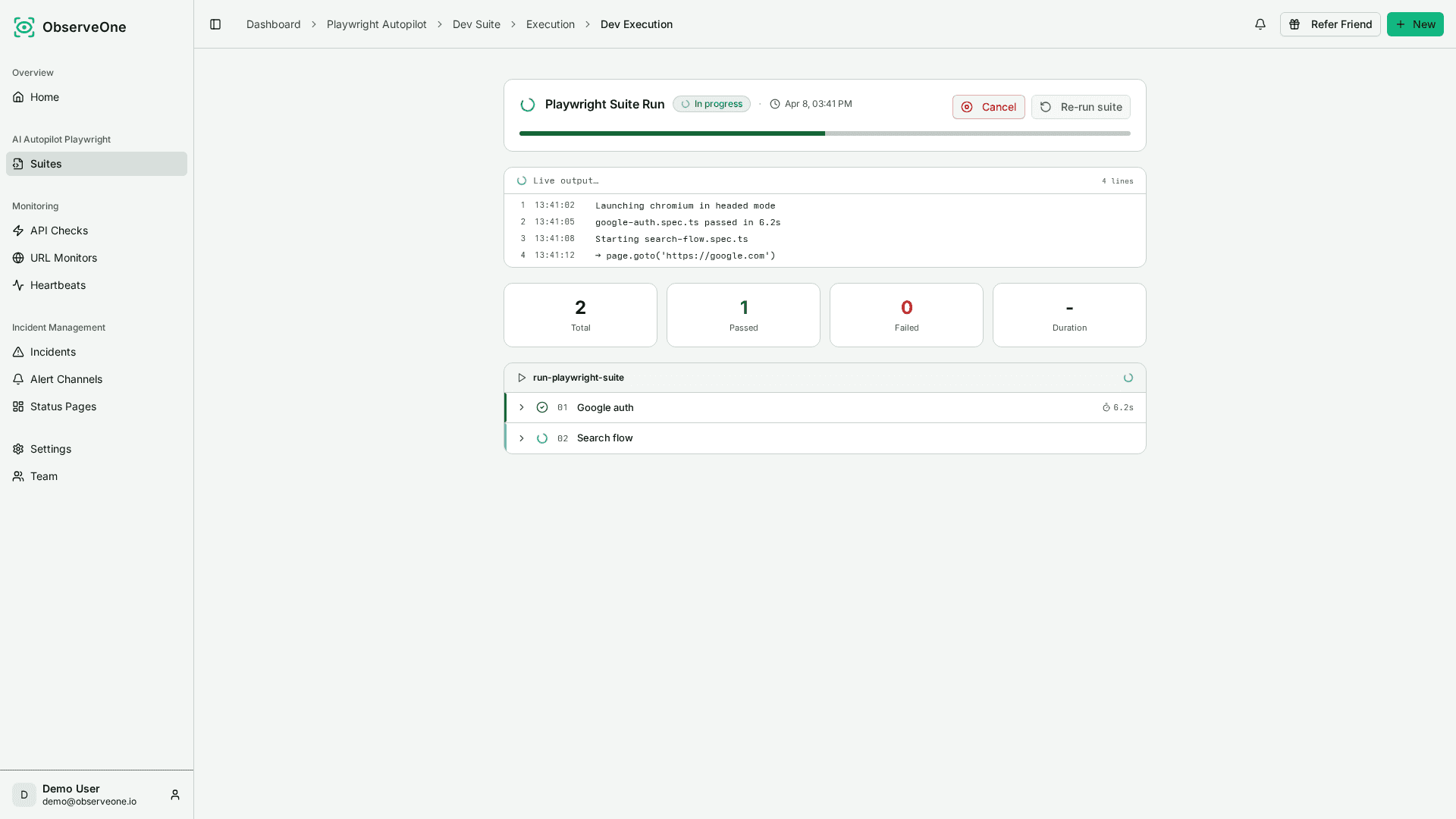
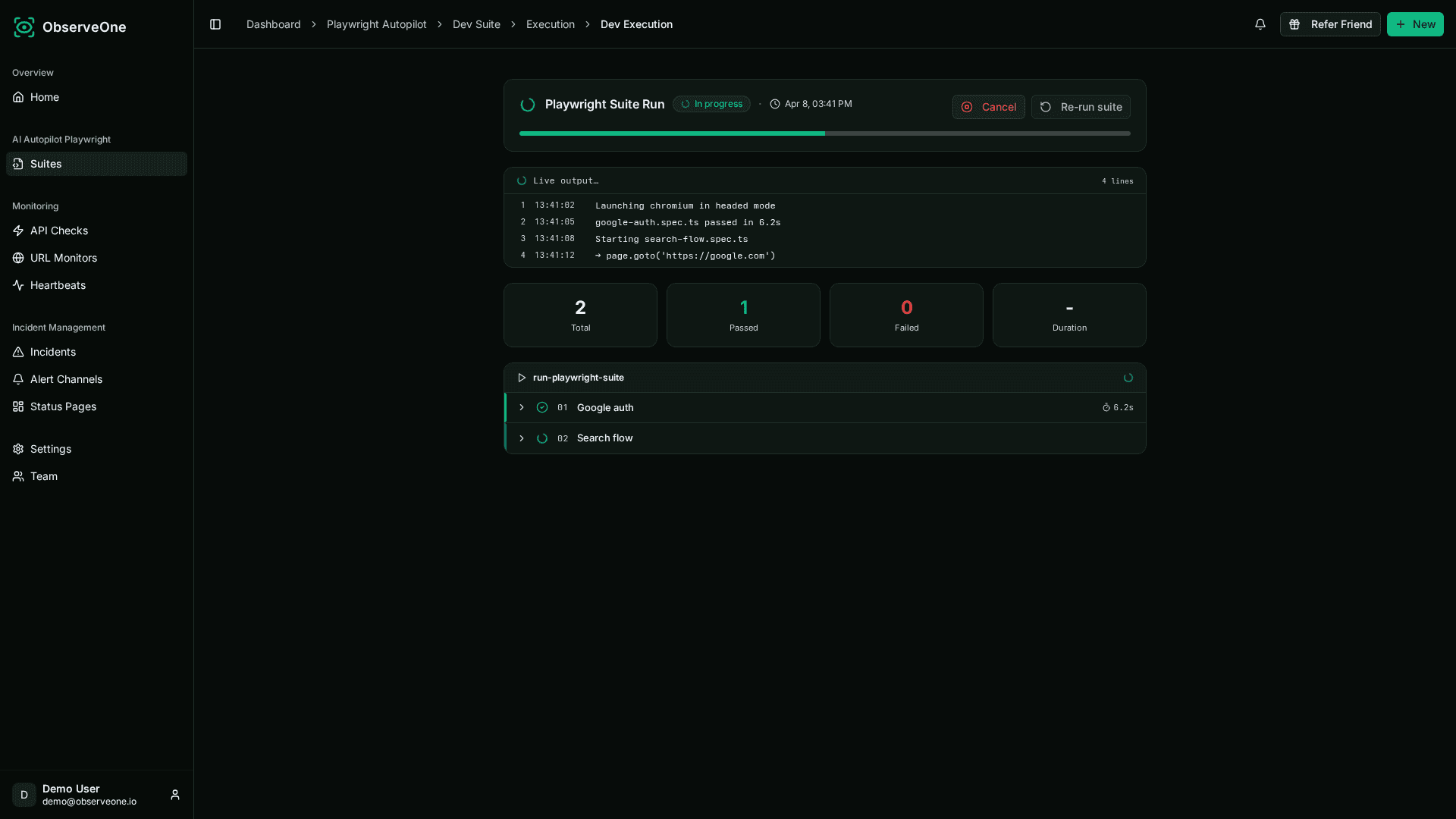
3 things we put our name on.
A promise without a penalty is a slogan. Each of these costs us money when we miss it, and the questions at the bottom of the page say exactly what counts.
- 01
Green or free
5 flows green in your CI within 10 working days of access, or the €990 comes back.
- 02
Real bugs only
Every alert we send you is a real bug in your app. If a red reaches you and it was our test, our selector or our timeout, a 2nd in the same month makes that month free.
- 03
Walk away
Cancel any month. No notice period. The suite is plain Playwright in your repository and keeps running the next morning.
What we need from you
A staging URL. 1 test account, or a signup page and we create our own. 1 30-minute call in week 1, then questions in a shared channel when a spec needs a decision. That is all of it.
- First spec
- Free, 72 hours after access
- All 5 flows
- 10 working days
- Days 11 to 30
- We own every run
- Guarantee
- Green or free
- If you continue
- €990 credited against month 1
From €2,500 a month for about 20 flows after the pilot. The first 5 teams lock €1,500 a month for 12 months, in return for a logo and a short case study.
Before you pay, and the 30 days after
You give us a URL and a test account. We do the rest. By day 30 your critical flows are under test and the suite stays green without anyone on your team babysitting it.
- Day 0
Your first spec, free
Send a URL and a login. Within 72 hours there is a passing Playwright spec for your riskiest flow, in a pull request to your repository. Keep it either way.
- Days 1–10
The other 4
We walk your app the way your users do and name the 5 flows worth protecting. You correct the list, we write the specs. Role and test-id locators, honest waits, and no sleep(3000) papering over a race condition. All 5 green in your CI by working day 10.
- Days 11–30
We own every run
The suite runs on a schedule from the regions your customers sit in. Every red comes to us first. A broken selector gets fixed before you hear about it. A real bug gets a trace, a repro, and a message to the person who can act on it.
- After that
Month to month
Up to about 20 flows, same rules, same guarantees. Cancel any month and the suite keeps running in your CI the next morning.
It is your code. You could fire us tomorrow.
- Plain Playwright
- No wrapper, no DSL, no runtime of ours in your package.json.
- In your repository
- We work on branches and open pull requests. You review the diff before it lands.
- Read by a person
- AI drafts and triages. Someone here reads the result, because a confident wrong test is worse than no test.
import { expect, test } from '@playwright/test';test('checkout completes with a saved card', async ({ page }) => {await page.goto('/cart');await page.getByTestId('cart-line-item').first().waitFor();await page.getByRole('button', { name: 'Checkout' }).click();await page.getByRole('radio', { name: /Visa ending 4242/ }).check();await page.getByRole('button', { name: 'Place order' }).click();await expect(page.getByTestId('order-confirmation')).toBeVisible();await expect(page).toHaveURL(/\/orders\/\d+/);});
Roles and test ids, so a restyle does not take the test down with it.
A suite nobody runs is a suite nobody trusts.
Writing the tests is the easy half. We schedule them, watch every run, and put failures in front of the person who can fix them. If a run goes red because of something we did, you never hear about it. If you do, that month is free.
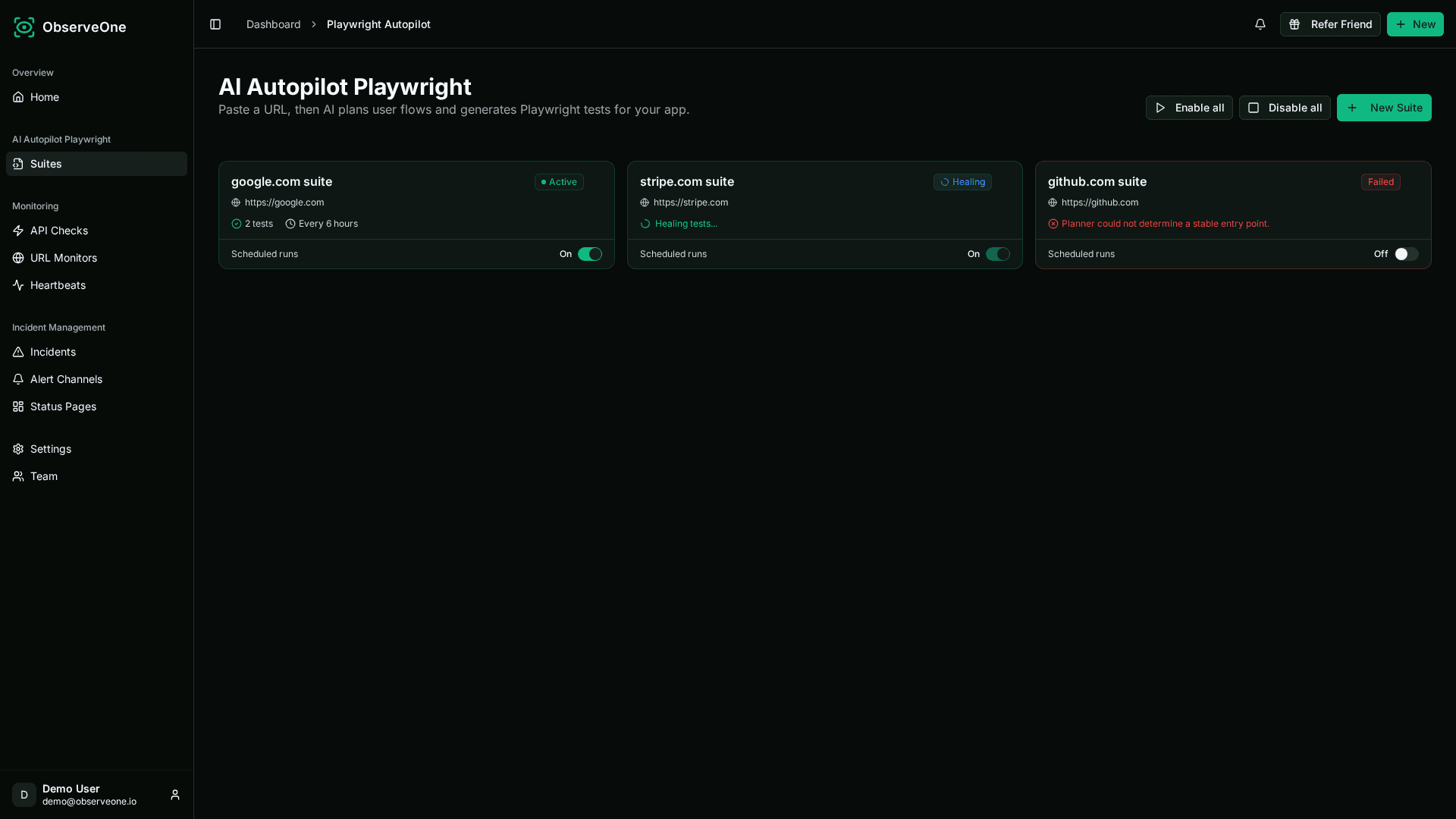
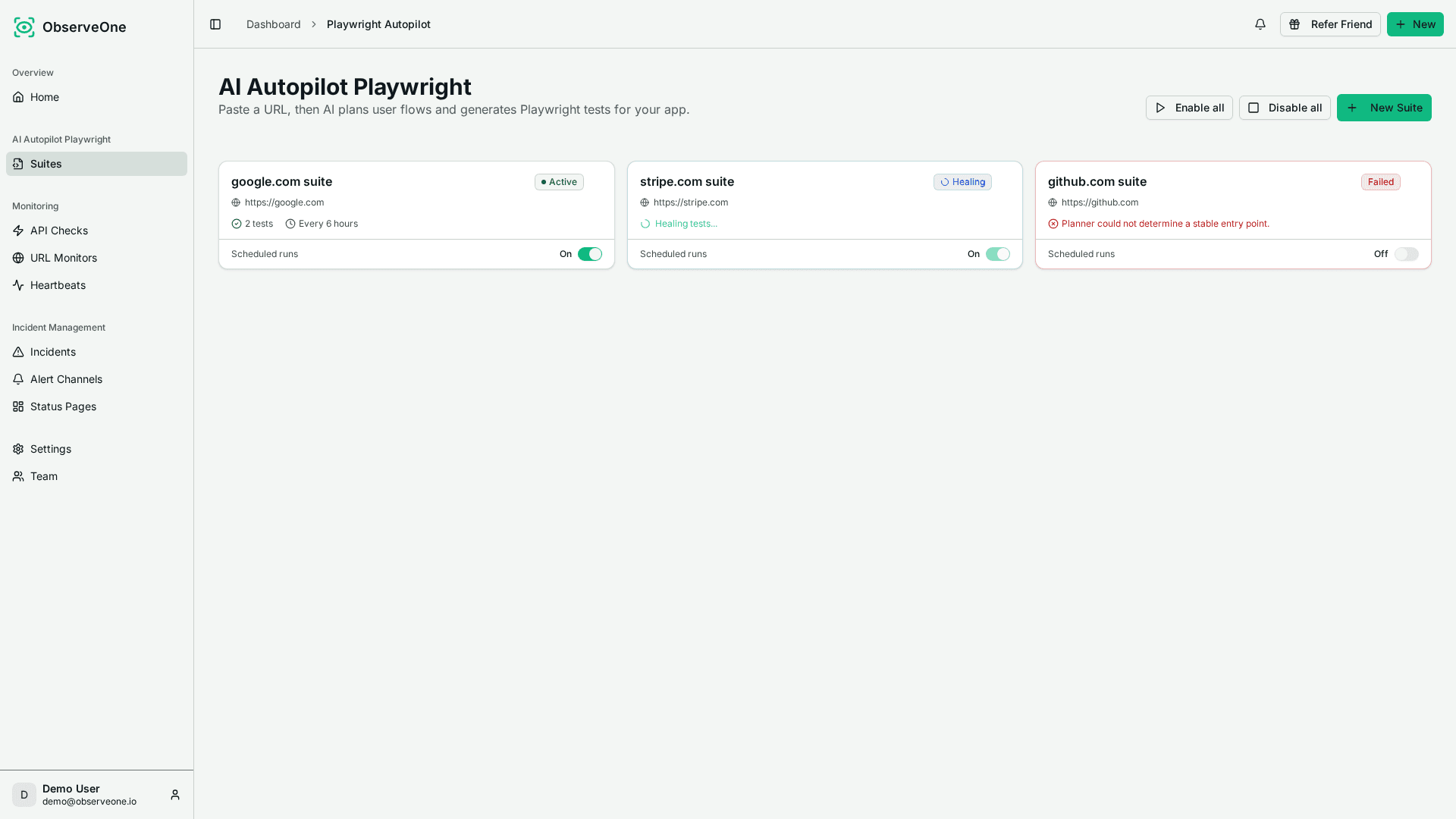
- Browser journeys
- The suite we wrote, on a schedule, from the regions your customers actually sit in.
- API and database checks
- Endpoints, plus Postgres, MySQL and Redis reachability, so a green UI on a dead backend gets caught.
- Certificates and uptime
- URL, TCP, UDP and SSL expiry, because the most embarrassing outages are never in the code.
You are not choosing between us and nothing.
You are choosing between us, a hire, and doing it yourselves. 2 of those are genuinely better than us at something, so here is the comparison with those parts left in.
| Concern | Managed QA | An in-house QA hire | Your team, between features |
|---|---|---|---|
| Time to the first covered flow | 72 hours. Your first spec is a pull request before you pay anything. | Months. Hiring, notice period, onboarding, then learning the product. | Whenever a sprint has room, which is usually the problem. |
| Product knowledge | We learn it. That costs you 1 call in week 1 and a question now and then. | The deepest of the 3. They live in the product every day. | Already there. Nobody knows it better than the people who built it. |
| Who triages a red run | Us, before it reaches you. | Them, during their working hours. | Whoever opens the CI tab first. |
| Holiday, illness, notice period | Covered. It is a team, not a person. | The suite goes quiet until they are back. | Same people, same load, no change. |
| When a release deadline hits | Coverage continues. It is not your sprint. | They usually get pulled onto release work. | Tests are the first thing dropped. |
| What you own at the end | Plain Playwright in your repository. | Everything, plus an engineer who knows it cold. | Everything. |
Send a URL. Get a passing spec back.
Within 72 hours of access you get 1 Playwright spec for your riskiest flow, as a pull request to your repository. It costs nothing and you keep it either way. Then we ask whether you want the other 4.
- 1 spec, for your riskiest flow, in a pull request to your repository.
- 72 hours from the moment we can log in.
- Free. No card, no call, no sequence.
Before you ask
The questions that come up on every first call, answered before the call.
You do. They live in your repository, under your license, written in standard Playwright. If you stop working with us tomorrow, the suite keeps running and any engineer can pick it up.
Yes. 1 flow, 1 passing spec, in a pull request to your repository, within 72 hours of us being able to log in. It is 1 of the pilot's 5 flows, done before you pay, so you judge the work instead of the pitch. If that is all you wanted, keep it.
Some of it will, and that is the part you are paying us for. We lean on role and test-id locators so a restyle does not take a spec down, and when a real change lands we update the spec that day instead of leaving a red run for you to interpret.
An alert is a message from us to a person on your team saying a covered flow is broken. A CI status is not an alert. If an alert turns out to be our test, our selector or our timeout rather than a bug in your app, that is a false alarm. 1 in a month is on us. A 2nd in the same month makes that month free. The same rule applies during the pilot.
Send them anyway. We usually keep more than teams expect. The genuinely flaky ones get rewritten or deleted, and we tell you which is which rather than quietly skipping them.
A staging URL and 1 test account, or a signup page so we can create our own. 1 30-minute call in week 1 with someone who knows the product well enough to settle an argument about intended behaviour. After that, questions in a shared channel when a spec needs a decision.
The first spec is free. The pilot is €990: your 5 most critical flows in plain Playwright, in your repository, green in your CI within 10 working days or you do not pay, then 20 more days of us owning every run. Continue and the €990 is credited against your first month. After that it is from €2,500 a month for up to about 20 flows. The first 5 teams lock €1,500 a month for 12 months, in return for a logo and a short case study.
No. The suite is plain Playwright and runs in your own CI whenever you want. By default we run it on ObserveOne from day 1, so you get scheduling, multi-region runs and alert routing without building any of that, and you never touch your CI until you choose to.
Stop being the person who owns the flaky test.
First spec free, within 72 hours of access. Pilot €990, green or free. The first 5 teams lock €1,500 a month for 12 months.